
Behaviour
‘Behaviour in school is exemplary.’ (Ofsted)
At Benedict Biscop C.E. Academy, our aim to create a culture of good behaviour and behaviours for learning, where staff are attentive, observant and who are skilled at identifying any underlying needs our pupils make have. In doing this, our staff will be able to respond in appropriate ways that support our pupils based on their needs at that time. Key to this is the strong focus on the development of relationships and social and emotional skills, which starts within our Early Years.
Alongside this we have created a system of behaviour management which is fair and consistent and which establishes a safe, orderly and positive learning environment in which both children and staff can flourish – so that children and teachers can learn together to achieve all that they can, meeting our vision…’With God all things are possible.’
We encourage children to take responsibility for their own actions which take account of mutual respect, good manners and show consideration for others. Staff are excellent role models and pupils have clear expectations which supports them to behave well.
School rules

Every child has a right to learn and every member of our community has the right to be respected.
Article 28 from the United Nations Convention On The Rights Of The child states: Every child has the
right to an education. Primary education must be free and different forms of secondary education
must be available to every child. Discipline in schools must respect children’s dignity and their rights.
As a Rights Respecting school and with Justice as one of our Core School Values, we have created our 5 school rules which aim to provide a framework for positive behaviours expected in school and which underpin our positive reward system. These rules develop trust and encompass key rights of the child.
- Be Kind
Treat everyone and everything with respect. Be polite and honest in all situations and never hurt
others feelings with your words or actions. Handle equipment carefully and value our resources.
Article 29 Every child has the right to education which tries to develop your personality and abilities
as much as possible and encourages you to respect other people’s rights and values and to respect
the environment.
- Listen
Listen to each other and respect the opinion of others. Always be prepared to learn and carry out
tasks you are asked to do my all members of staff.
Article 12 Every child has the right to express their views, feelings and wishes in all matters affecting
them, and to have their views considered and taken seriously.
- Follow Instructions
Always do your best. When you are in school or on school visits, willingly do as you are asked by an
adult, when you are asked to do it. - Keep Your Hands and Feet to Yourself
- Walk sensibly around school
Move around our school safely. Walk sensibly and calmly in school. Have fun at playtimes but be
considerate towards others and use self-control.
This is supported by:
- Consistent use of language across the school
- A fair reward system linked to ‘individual’ and ‘house team’ points.
- High quality teaching that develops the highest standards of behaviour, ensuring that pupils
are appropriately challenged, engaged in learning and motivated to learn - Staff recognising that children need to learn to negotiate with each other in a range of
different situations, as a major life skill, with staff supporting the children to do so. - Parents who want the best for their children and recognise that children make mistakes but
that we must learn from them. - Forgiveness is a core School Value which pervades school life
- A bespoke Personal Development curriculum which provides a framework for staff to support
pupils and help promote and improve excellent behaviour.
Rewards
We believe that high standards of work and behaviour should be celebrated and encouraged through a system of positive rewards for our children. At Benedict Biscop C.E. Academy, we look for every opportunity to celebrate success and achievement, rewarding good behaviour, high attendance, effort, progress, academic achievement and successes beyond our school curriculum.
Pupil voice is really important to us, and our Rights Knights have fed into developing our systems of rewards currently in place. Children, on a weekly basis, can receive ‘Rainbow Award Certificates’, which are celebrated in the weekly celebration element of our Friday Community Worship – where parents are specifically invited, on the week of their child’s award, to attend and join in the celebration with the rest of our worshiping community. This is also shared with our wider community through our Facebook page. These awards celebrate excellence, hard work, dedication and improvement across our full curriculum.
On a weekly basis, pupils are also entered in to our ‘Roll of Honour Book’, an award where we recognise how our pupils are demonstrating Christian Values throughout the week. Pupils names are read out in Friday worship and our community celebrate together.
Across all year groups, pupils are given a ‘House Team’. This encourages the children to develop a team identity through a collaborative approach to positive behaviour. Any staff member is able to reward pupils with ‘House Points’ throughout the school day, which are added to the class team notice board. At the end of each week, House Captains collect the totals from each class and the running total is shared in our Friday worship. At the end of each half term, the house team with the highest total receives and ‘house treat’/team building session.
“Behaviour is courteous and thoughtful, showing a real awareness of the needs and rights of others.” (Ofsted 2012)

Thrive at Our School
We are proud to be a Thrive School. Thrive is a whole-school approach that supports the social and emotional development of children and young people, helping them feel safe, valued and ready to learn. Thrive recognises that behaviour is a form of communication and helps adults understand and respond to children’s underlying needs in a positive and supportive way.
What is Thrive?
The Thrive Approach is based on research into child development, attachment theory and neuroscience. It helps schools understand how children develop socially and emotionally and provides practical strategies to support their wellbeing and learning.
At the heart of Thrive is the belief that every child should:
- Feel safe, secure and valued
- Develop positive relationships
- Build resilience and emotional wellbeing
- Learn to understand and manage their feelings
- Be supported to achieve their full potential
How Thrive Helps Children
Through Thrive, children can develop:
- Confidence and self-esteem
- Emotional resilience
- Positive social skills
- Improved behaviour and relationships
- Greater readiness to learn
What Does Thrive Look Like in Our School?
As a Thrive School, we:
- Build strong, positive relationships with our pupils.
- Promote emotional wellbeing across the whole school.
- Support children to recognise, understand and regulate their emotions.
- Create safe and nurturing learning environments.
- Provide additional Thrive support where pupils need extra help with their social and emotional development.
- Work closely with families to ensure children receive consistent support.
The approach helps remove barriers to learning so that children can flourish both emotionally and academically.
What are Thrive Assessments & Action Plans?
We use Thrive-Online® to help us identify what aspects of the social and emotional curriculum we need to focus on for each class/group of pupils. We use this to support the development of their social and emotional skills based on their age or stage of development, by planning and implementing strategies and activities that can be used in class.
We also use Thrive-Online to assess and develop action plans for individual/ small groups of children. This ensures the staff working with them understand their individual needs and can meet these most effectively. This is the process we go through:
- A Thrive assessment is carried out. This involves school staff assessing the positive display of important social and emotional skills from an individual child or small group of children and then determining the frequency and confidence of the skills being exhibited. The assessment is based on the normal daily observation of school staff. It does not involve the child directly responding to questions or having to experience being assessed.
- The child’s information will be reviewed by Thrive trained staff in school and, using the tools in Thrive online, an action plan specifically tailored to the needs of the child/ small group is developed. Time will then be allocated during the school week for this support to take place.
- Where there are other professionals and services involved, or required, for the best support of the child and/or family, it may be of benefit to share the Thrive action plan and profile. We will always inform parents/carers and gain consent prior to information being shared. Typically, this could include speech and language therapy, CAMHs provision, social care, educational psychology or other provision from the appropriate local authority, although this is not an exhaustive list.
The online tool is provided by Thrive who will process data on behalf of the school.
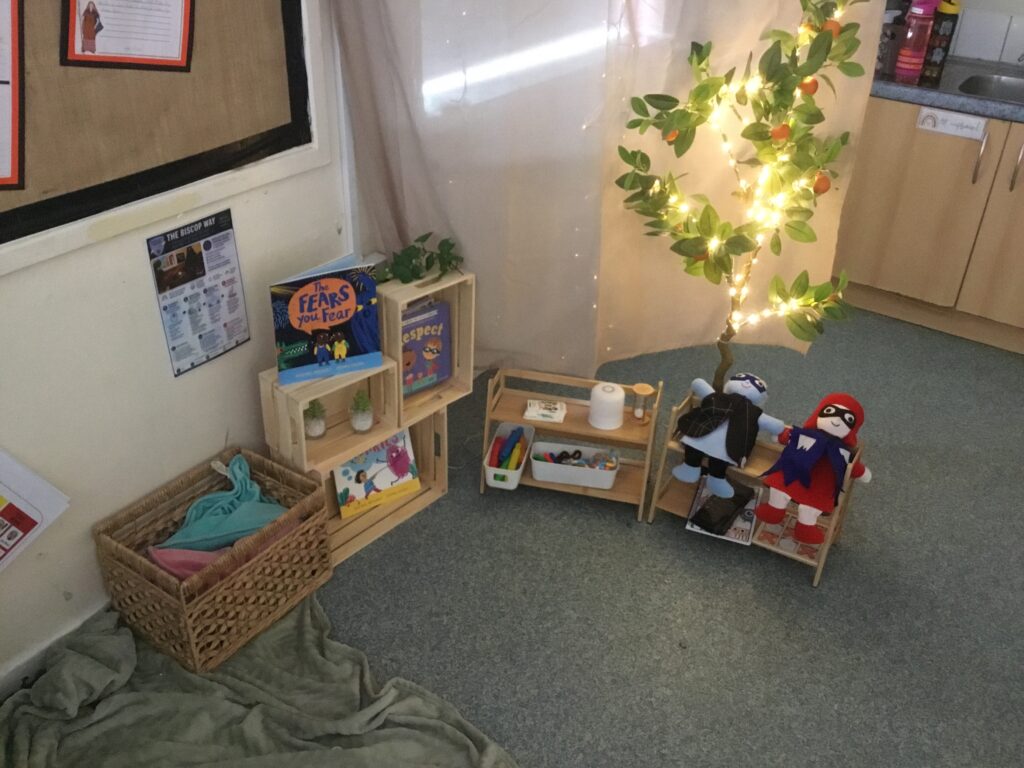
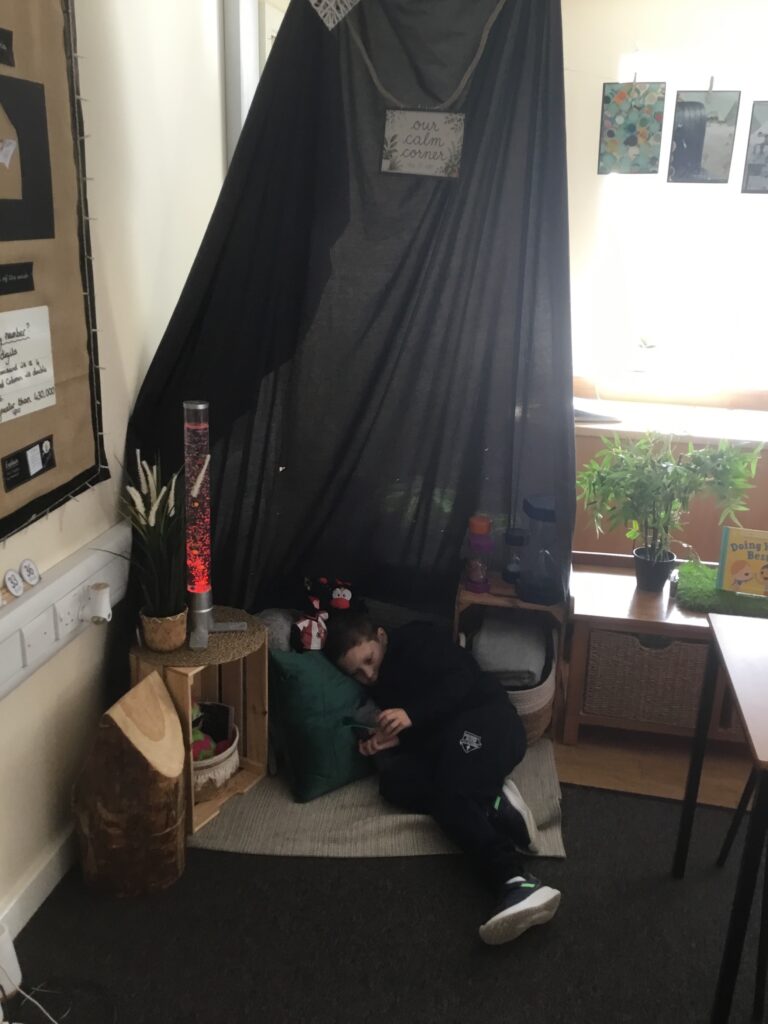
Our Spaces
In our school, we have a number of spaces to support the social and emotional wellbeing of our children, which includes a dedicated space used for Thrive sessions.
Our Commitment
We believe that children’s emotional wellbeing is just as important as their academic success. By embedding the Thrive Approach throughout our school, we are committed to ensuring every child feels understood, supported and able to thrive.
Do you want to find out more?
More information can be found on the Thrive website, which can be found here:
https://www.thriveapproach.com/ or please pop in to arrange a chat.
Our Thrive Licensed Practitioners in school are:
Mrs Clark (Deputy Headteacher)
Mrs Brown (Pupil Mental Health Lead)
Mrs Hansen (Class Teacher)
Mrs Young (Teaching Assistant)
Proud to be a Thrive School
We use the Thrive Approach to support the emotional wellbeing, resilience and personal development of all our pupils, helping every child feel safe, valued and ready to learn.